
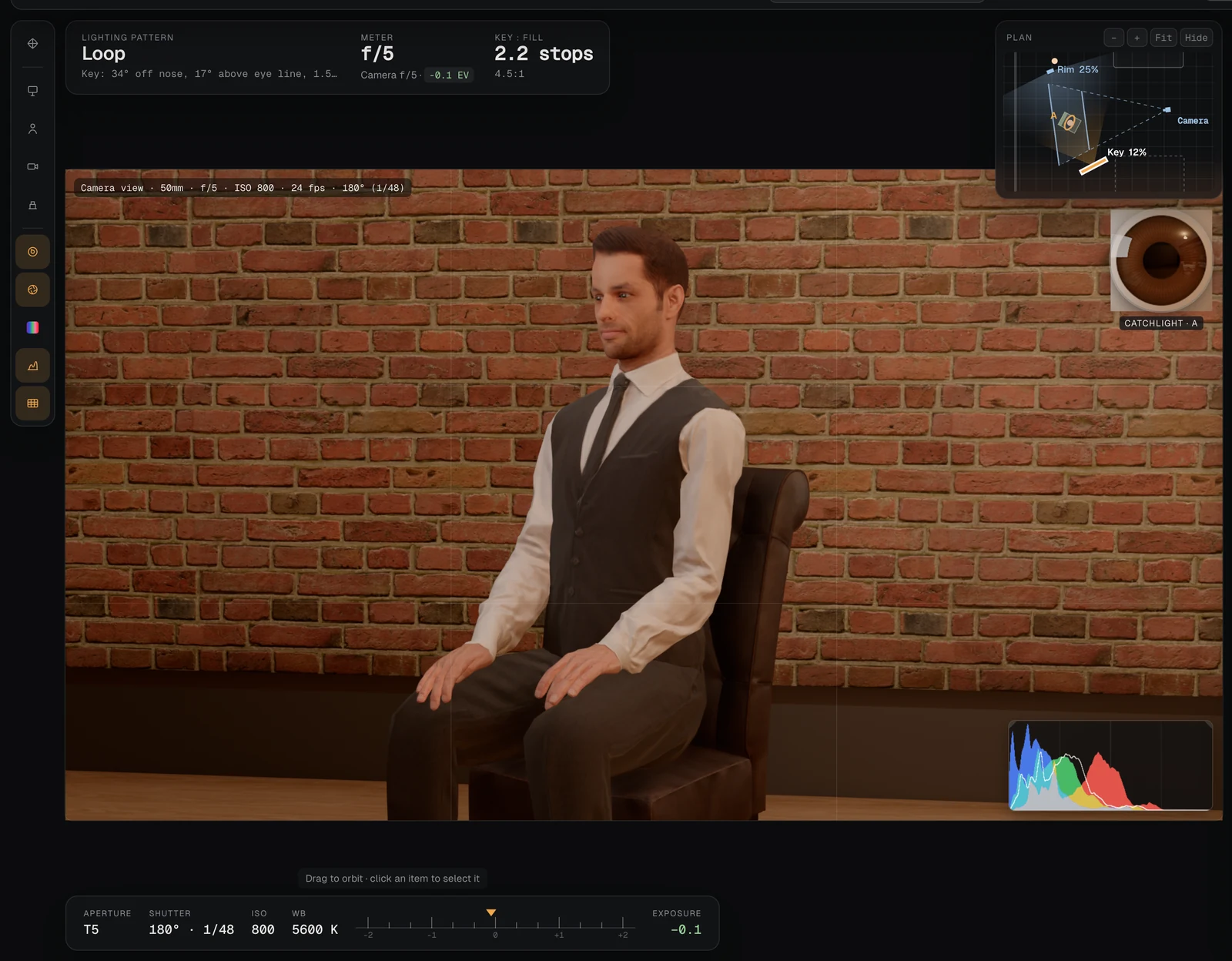
StrobeRoom 1.11 is mostly about people. Seated subjects were the weak spot in 1.10: their hands hovered just above the thighs and their arms reached forward, nearly straight. It looked stiff, and in an interview setup it was the first thing you noticed. So we went back to how someone actually sits.
Also in this update: five new people and a first name for everyone in the cast, a list with portraits to add a person from, a histogram in the camera view, and fixes for three things that made the picture twitch. The meter reads the same as before on every built-in setup.
Seated people at rest
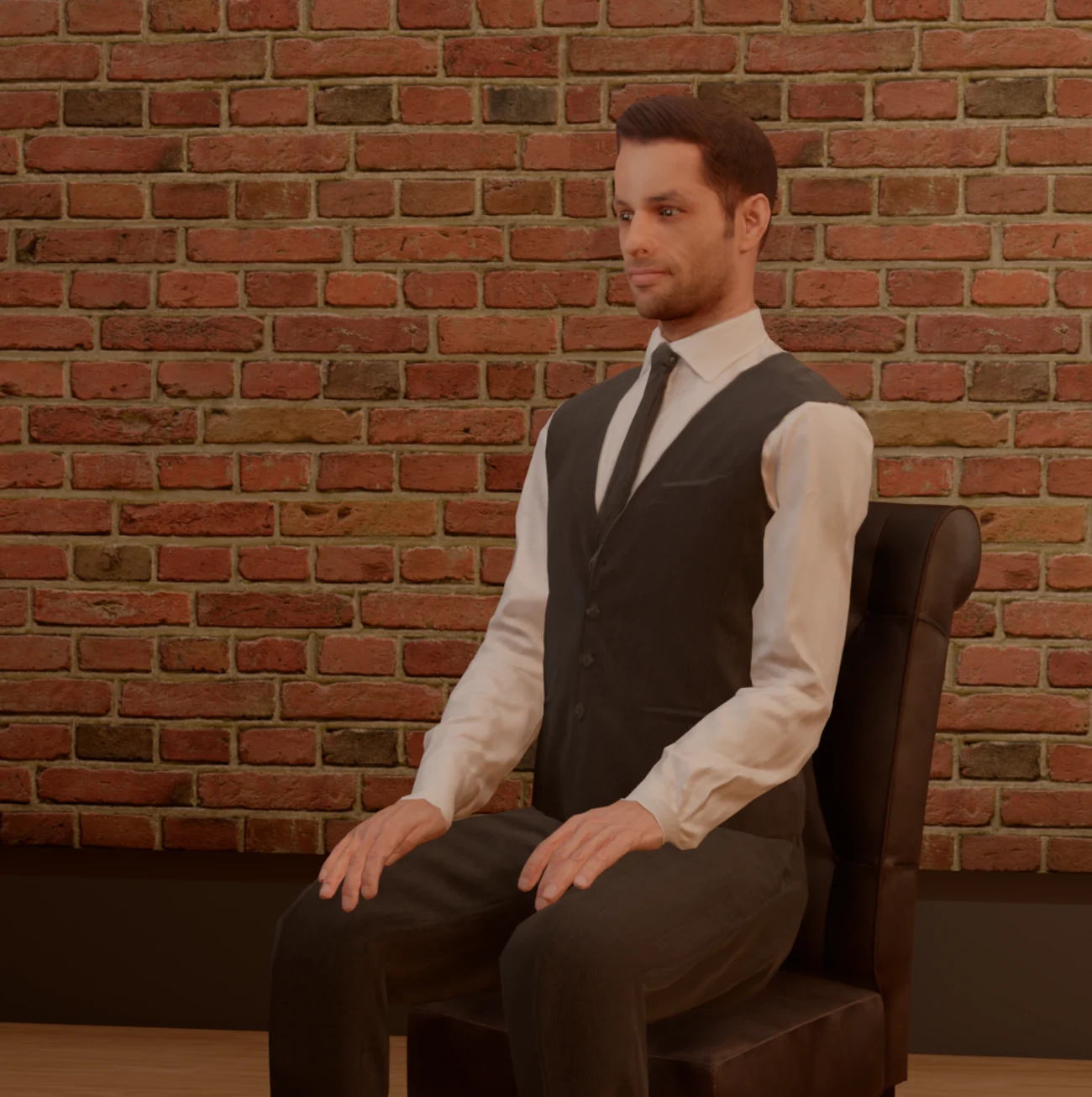
We used to hold a seated person's hand flat, a few centimetres above the thigh, and send the arm to a fixed spot far down the leg. It got there nearly straight.
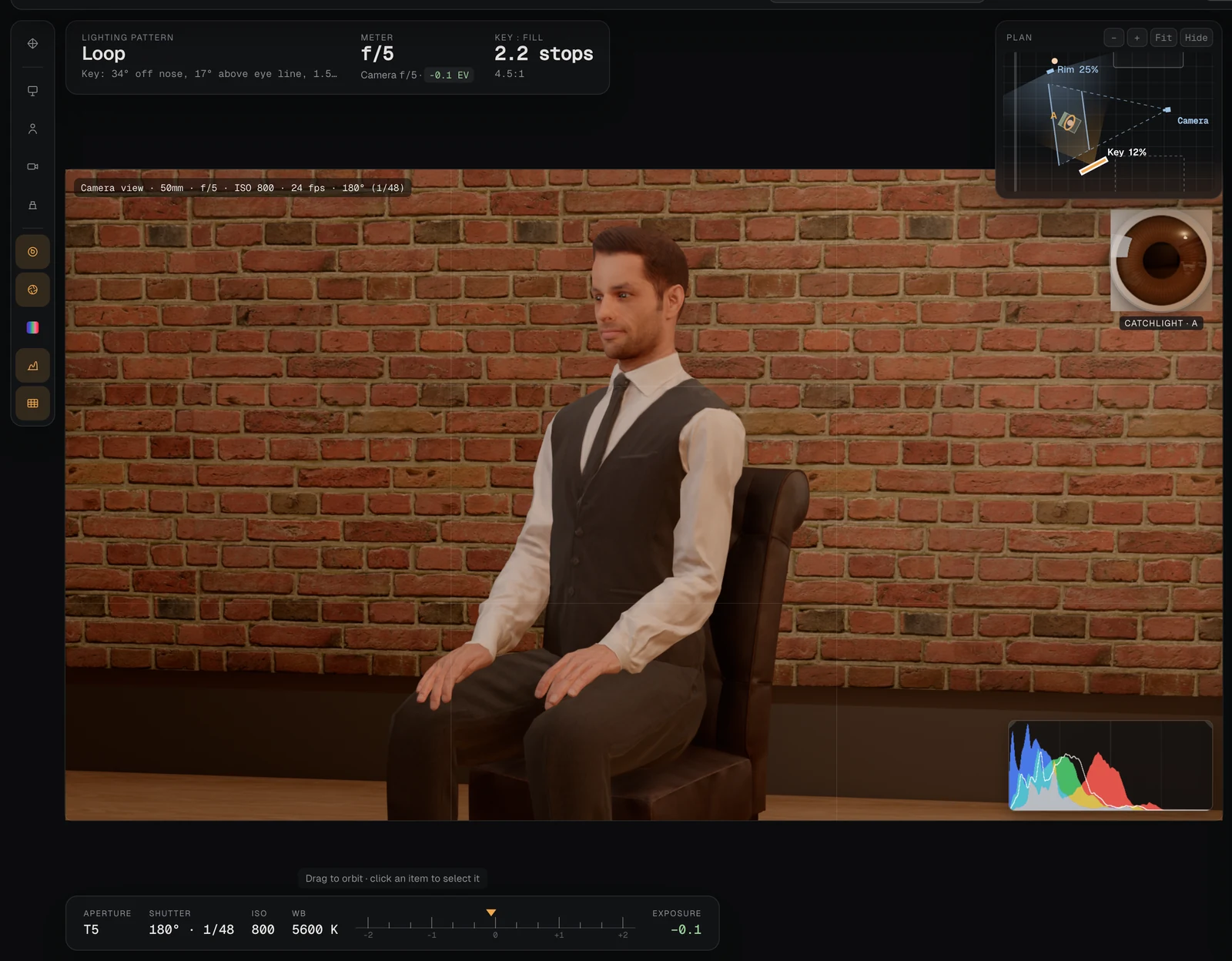
Now we lay the hand down by its own shape: the heel of the palm touches first, the hand tips until its front touches too, and each finger curls until it rests. We also place the arm the other way round. The upper arm hangs from the shoulder along the body, and the hand goes where the forearm comes down on the thigh. The shoulders sit a little lower as well.
- Hands held above the thigh → resting on it
- Arms reaching down the leg → hanging from the shoulder
- Elbow bend on the chair 7° → 26° and 36°
The elbow bend was measured on one of the cast; the two new numbers are the two arms. 7° is close to a straight arm.
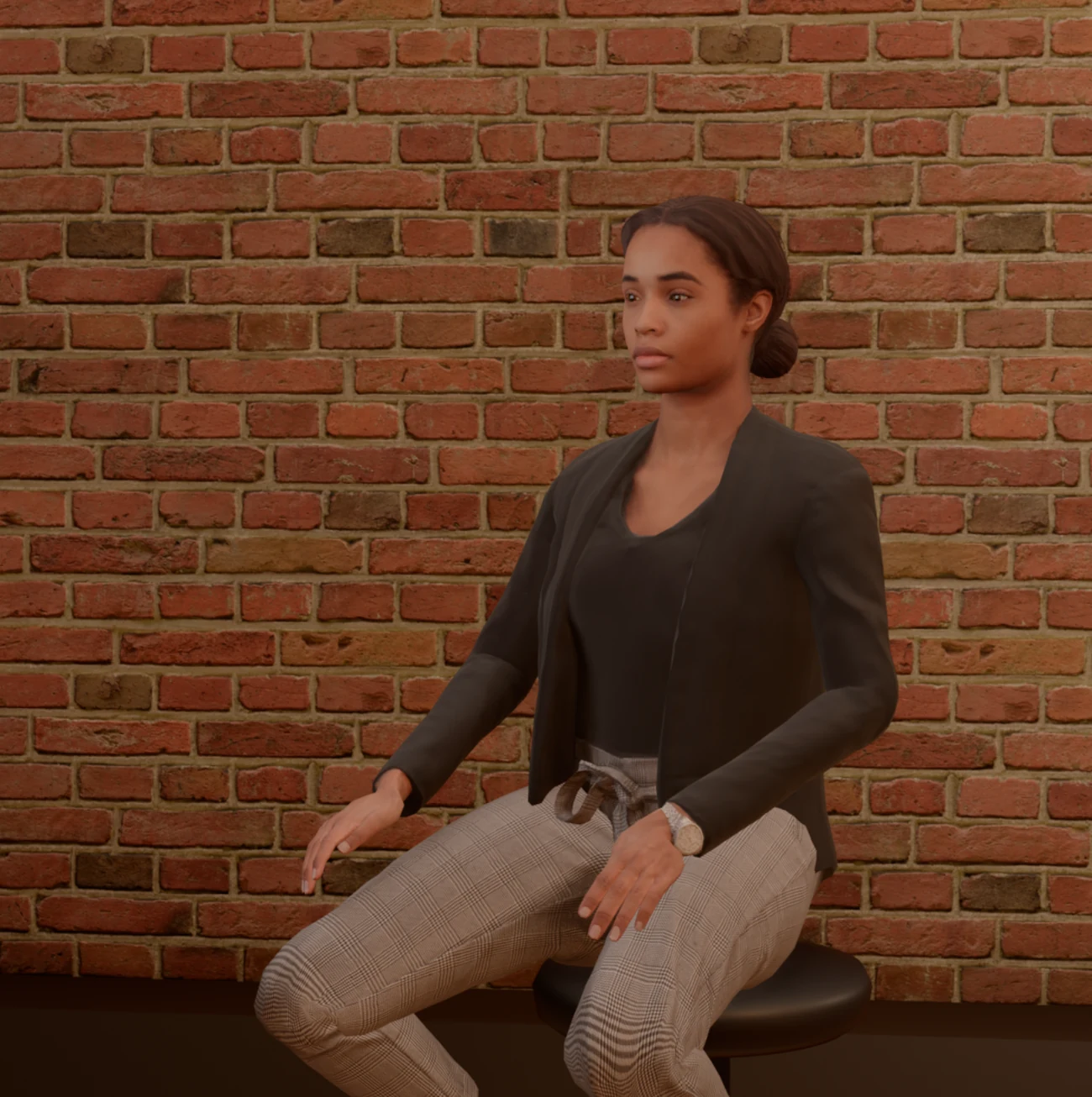
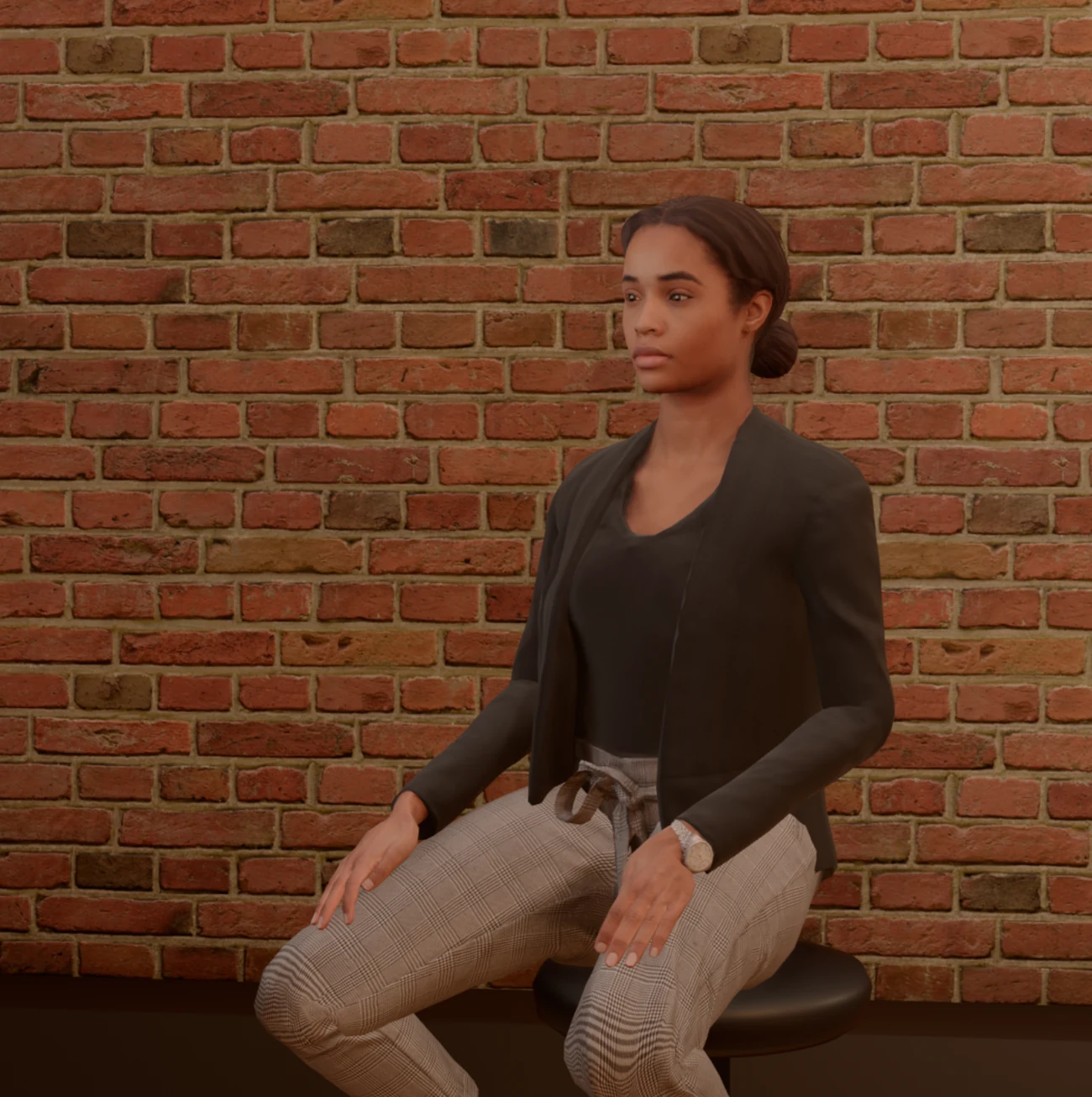
Same person, same stool, same camera. In 1.10.3 the far hand hovers above the thigh.
The lounge chair
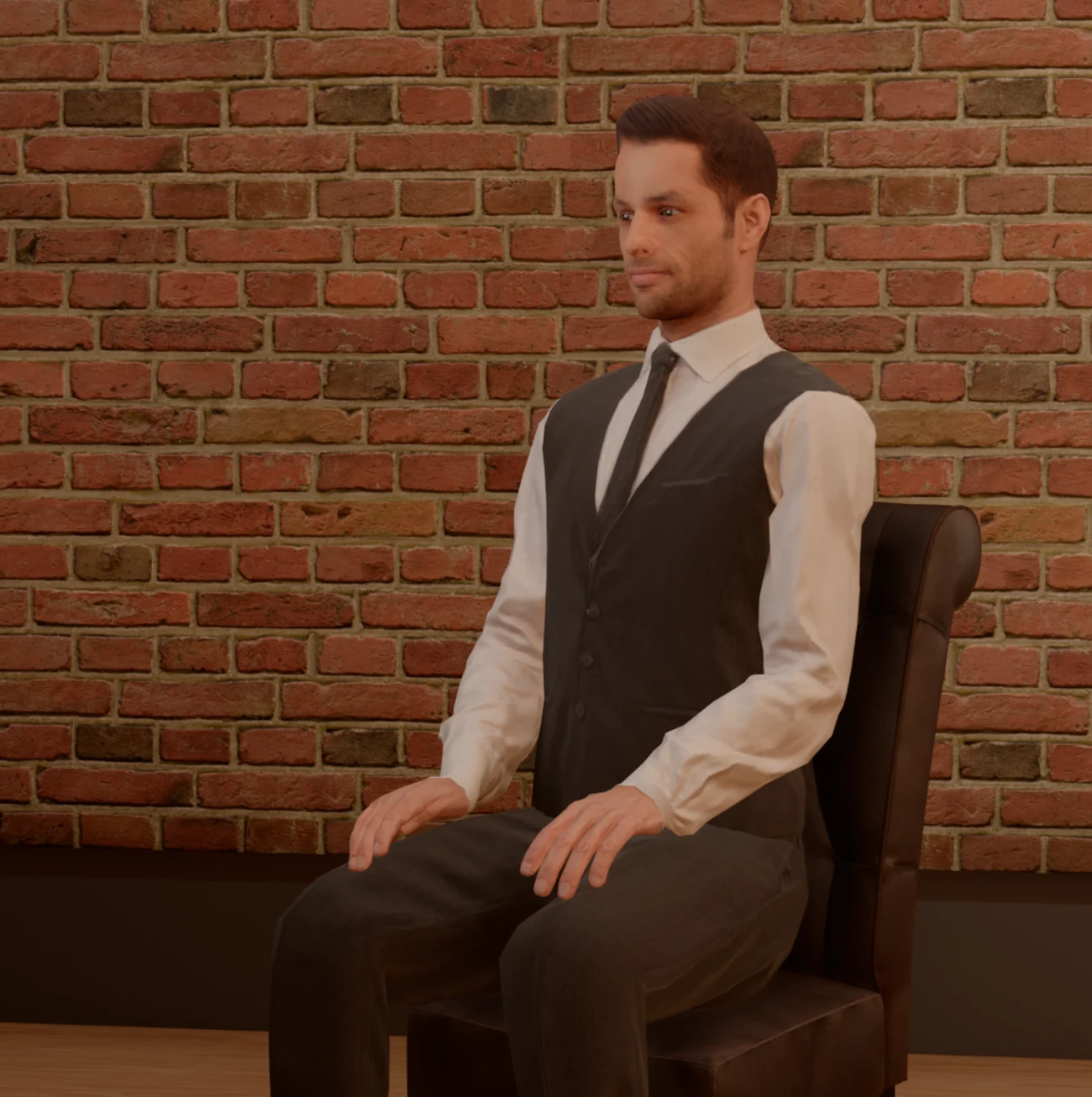
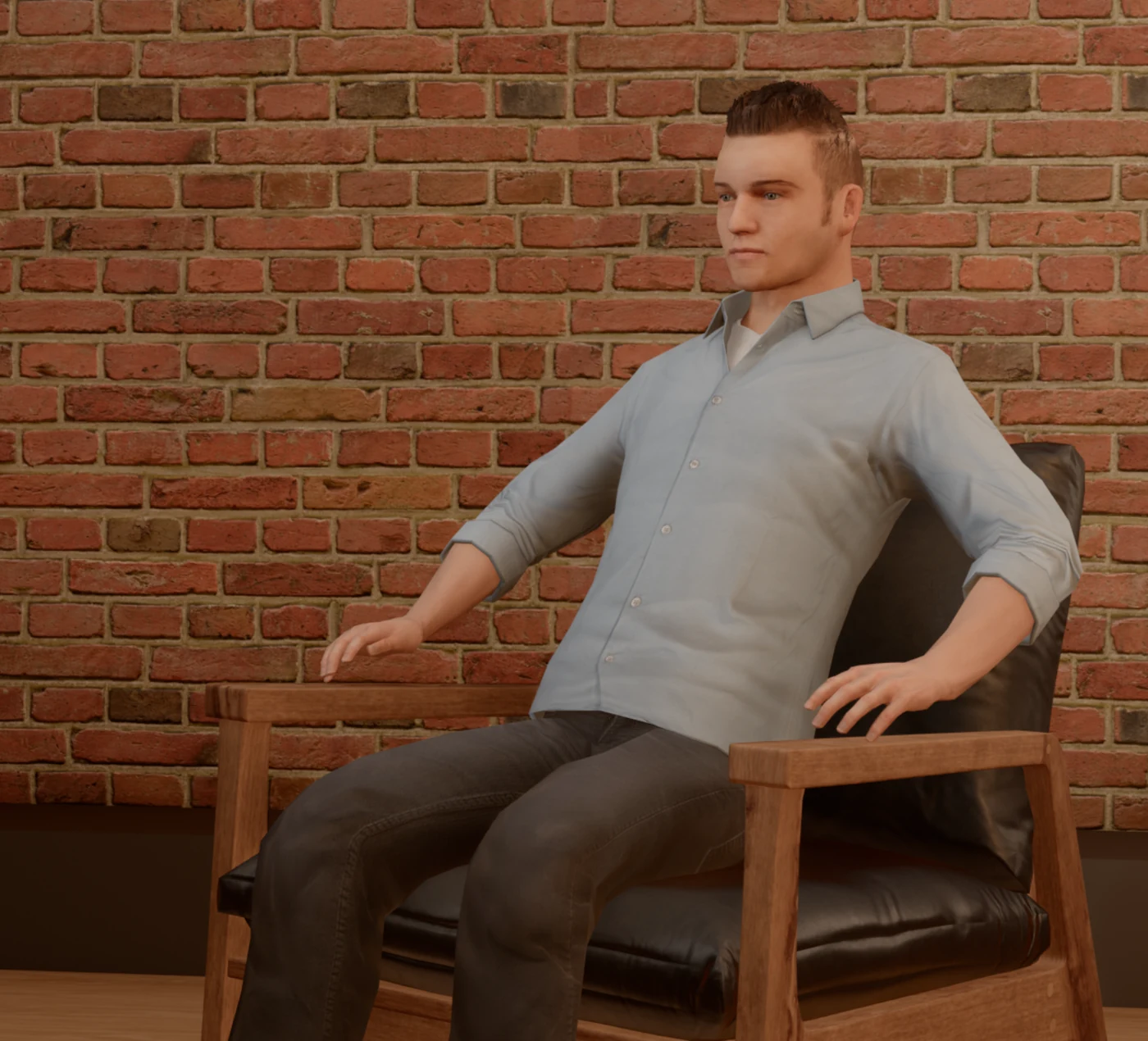
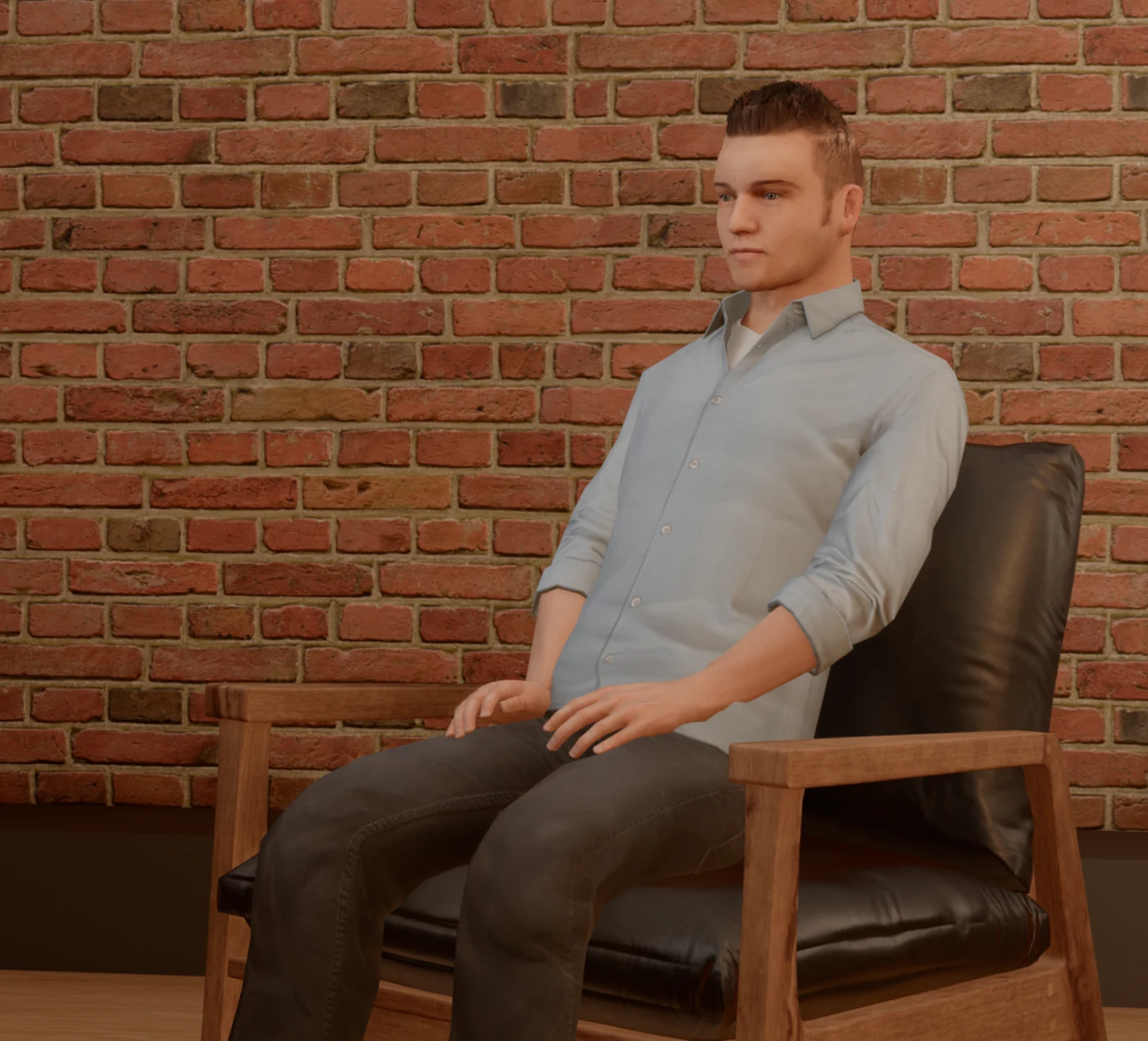
The lounge chair in the apartment needed its own fix. Its wooden arms are low, 13 cm above the cushion, and a resting elbow hangs well above that. With their hands on those arms, people sat with their arms spread and their elbows in the air. Now they sit back with their hands on their lap. Our rule from here on: hands go on an armrest only where an elbow can come down onto it.
Five new people, and a name for everyone
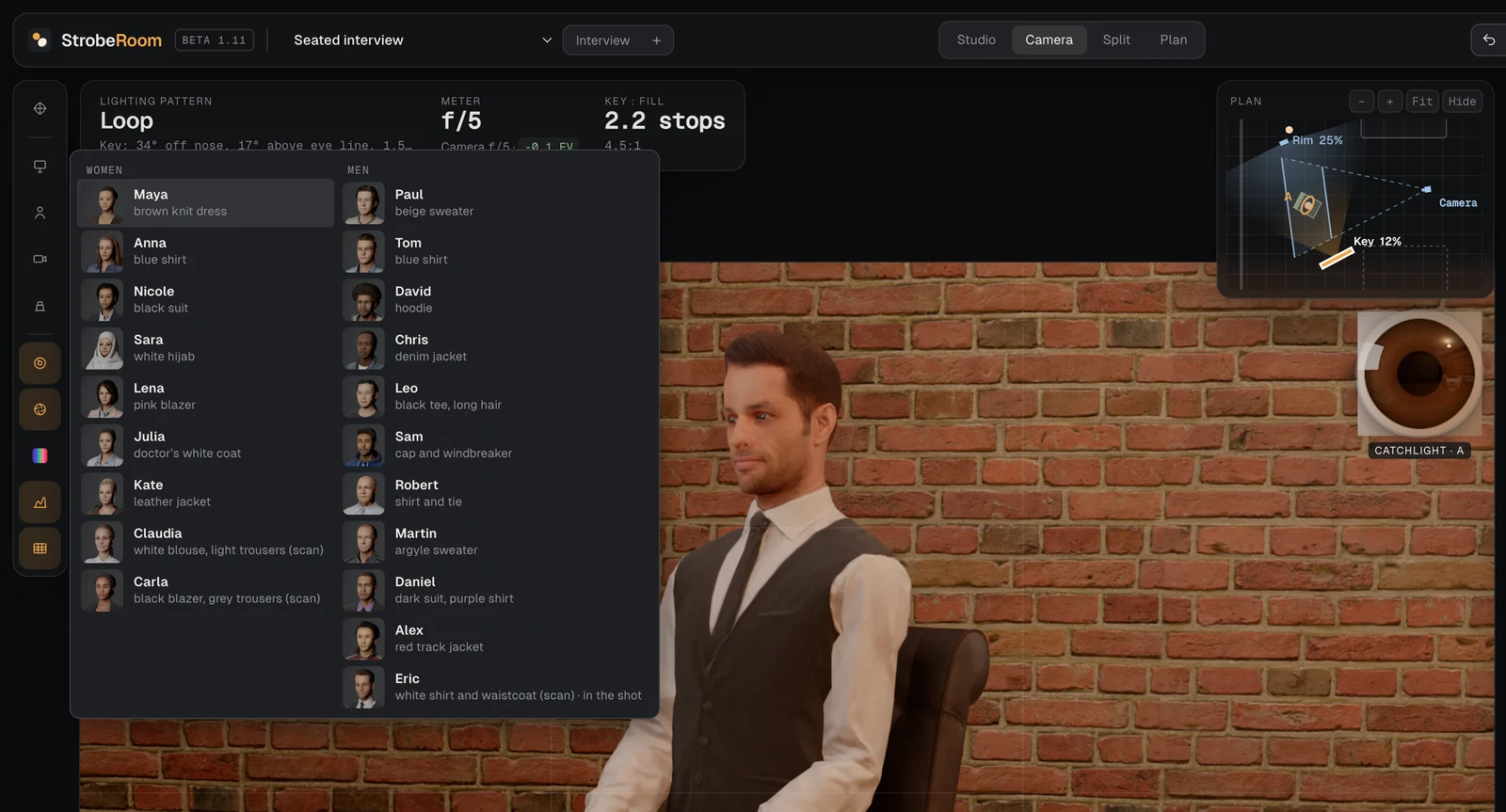
Maya, Julia, Kate, Daniel and Alex join the cast, wearing a knit dress, a doctor's white coat, a leather jacket, a dark suit and a track jacket. They have all five expressions and every pose. Maya takes the place of one earlier model, and setups that used that model open with Maya.
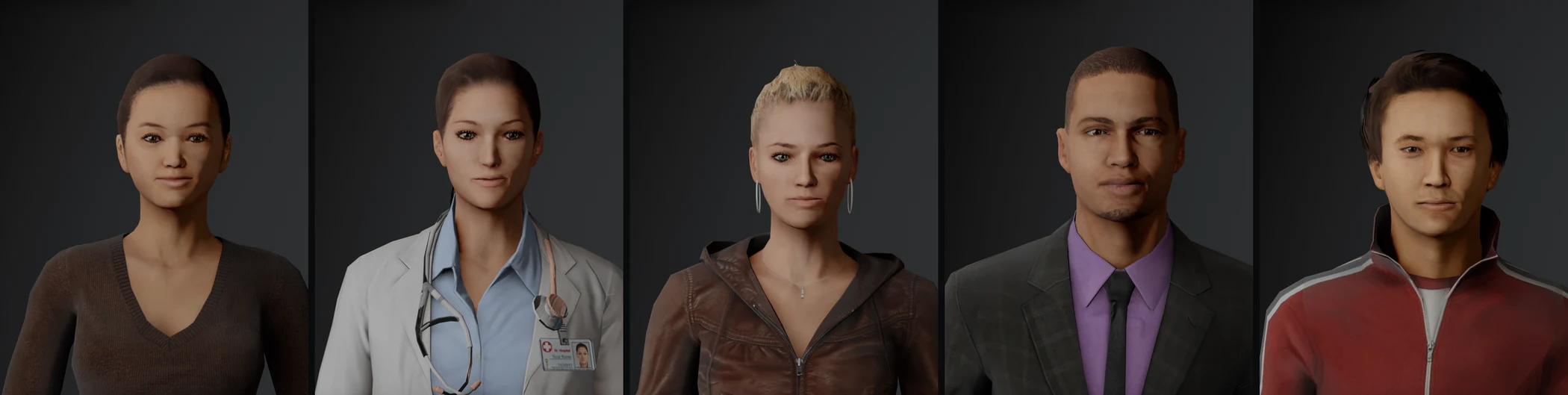
That takes the cast from 16 people to 20, and we gave everyone a first name. "Tom" is quicker to say on set than "the man in the blue shirt". In the layers a subject's line now starts with the name, as in "Tom · blue shirt", and the name is on the shoot sheet too.
Add a person from a list
The Add a person button used to add the next person in a fixed order, whoever that was. With 20 people to choose from, you should be able to see them first. The button now opens the whole cast, each with a portrait, a name and an outfit, and marks who is already in the shot. Pick someone and they join the setup, and the meter reads them.
A histogram in the camera view
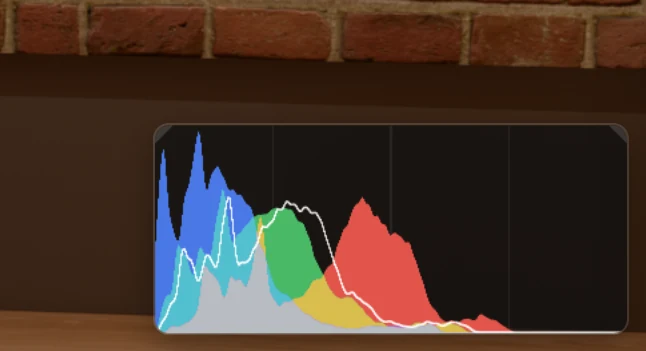
The Camera and Split views can now show a histogram in the corner of the frame: red, green and blue laid over one another, with brightness as a line. A corner mark lights up when part of the picture is pure black or pure white. Press H to show or hide it.
We count it from the picture on screen, after exposure, the tone curve, the picture profile and any LUT, so it shows how a setup would sit on a camera's histogram. Read it as an estimate, like the picture itself.
Bug fixes
Three things made the picture twitch. None of them changed a meter reading, but they were distracting.
- Fixed the catchlight close-up jumping. Each time its reflections were refreshed, which is after every change and several times a second while you drag a light, it was drawn one pixel off for a single frame.
- Fixed the camera frame shifting. After a switch of view the frame could sit a pixel differently until the next change, and then the whole picture moved. The settled picture is now the same every time.
- Fixed bounce light arriving with a twitch. When new bounce light is ready, the view now fades from the picture it had to the new one. Before, it dropped to raw frames and settled again. Bounce light also arrives about a fifth sooner after a change.
How we tested it
We rendered seated people on every seat from the front, the side and behind, with close-ups of the hands. An automated test also poses all 20 people in 13 poses and measures where a hand, arm or leg goes into the body or the furniture. Every standing pose of the earlier cast measures exactly as it did in 1.10.3, so only seated people changed. We also measured frame rate on the old and the new version back to back, and it is the same.
Known issues
- A long coat is solid, so its hem can pass into a cushion where a real one would fold.
- In the lounge chair the arms stay straighter than on the other seats, because the shoulders sit far behind the thighs.
- After you move the room light slider, the picture takes about half a second to settle.